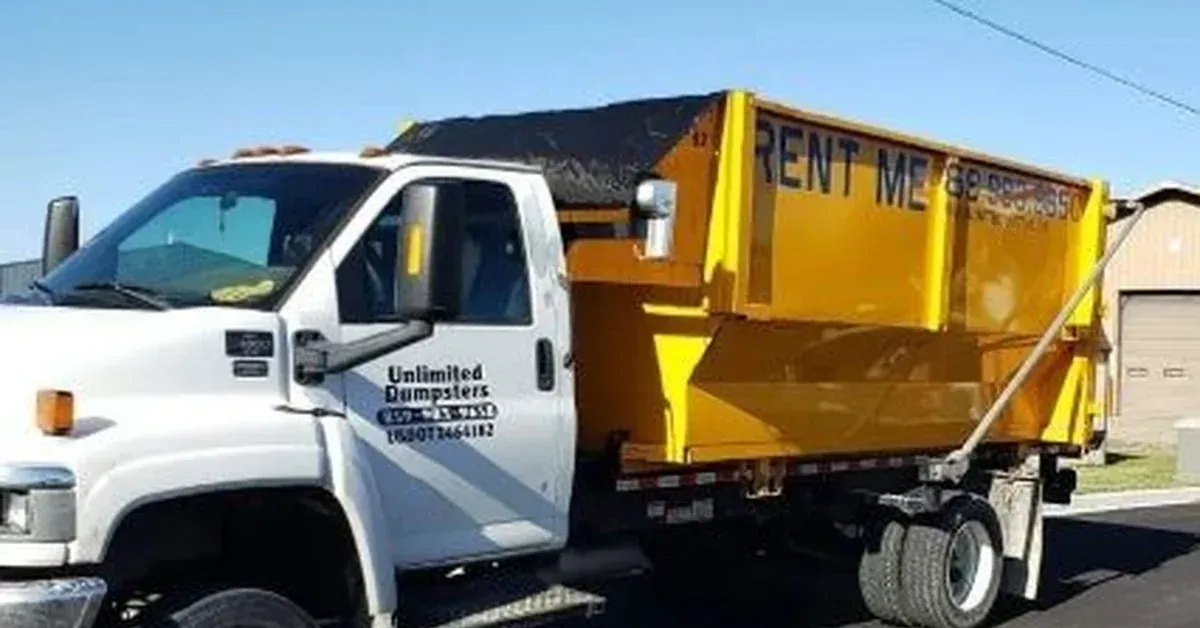
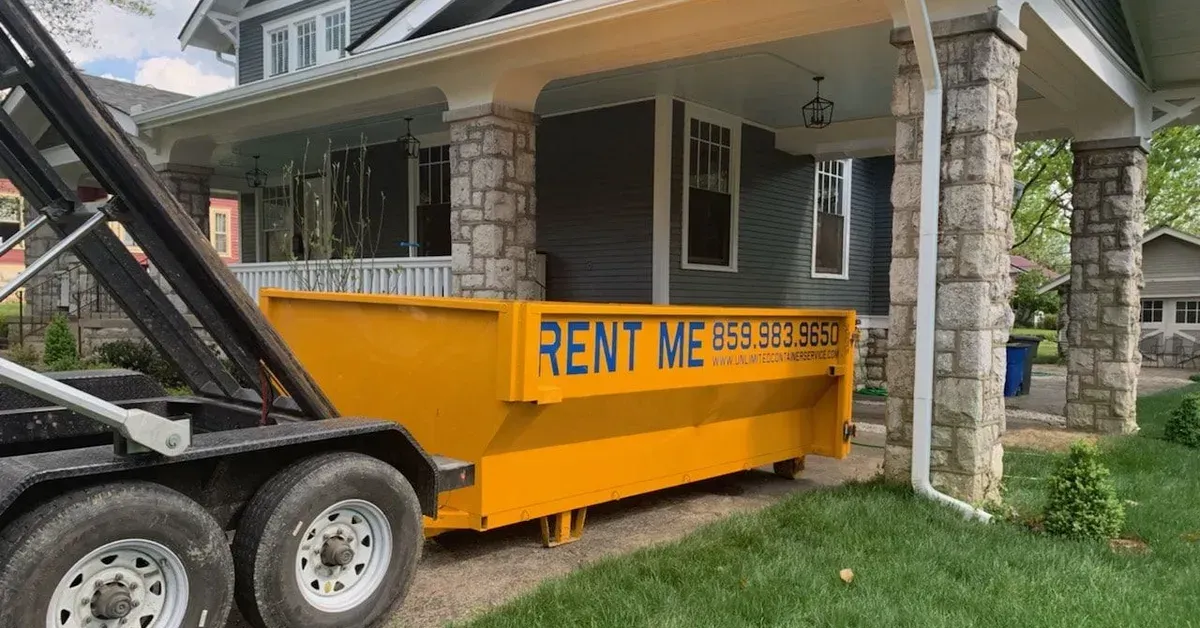
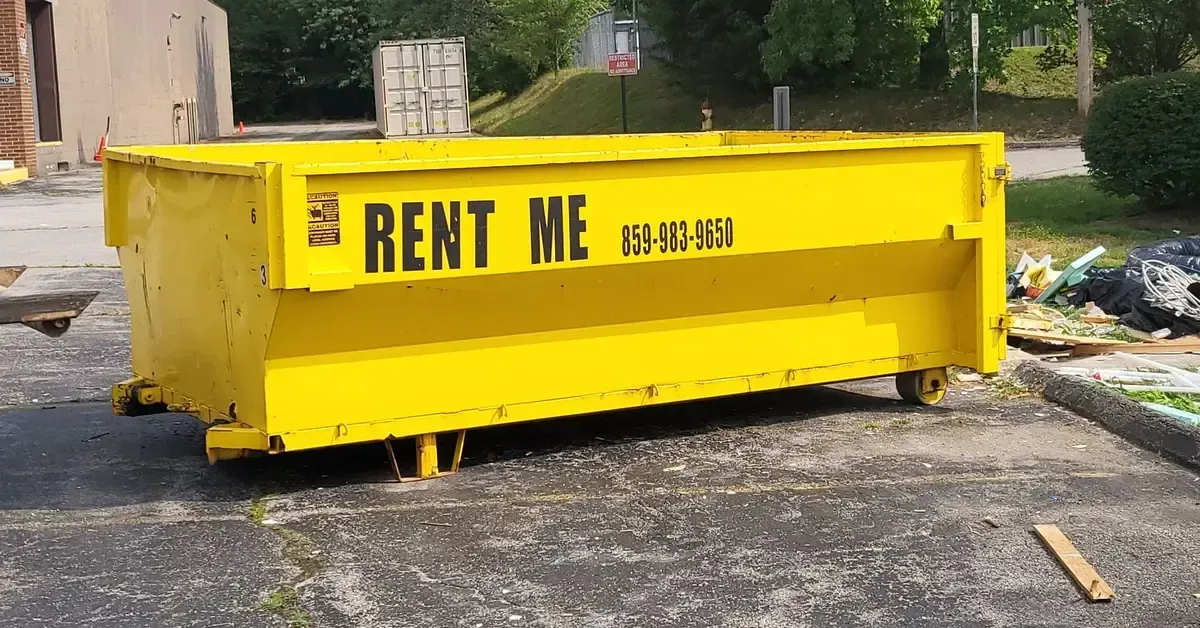
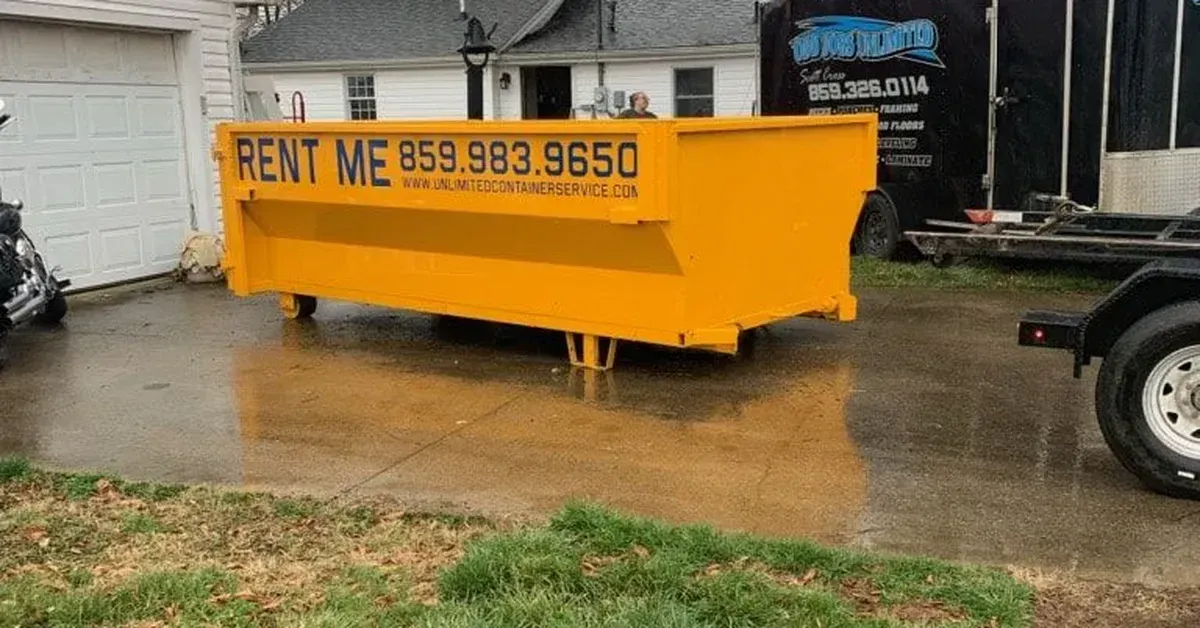
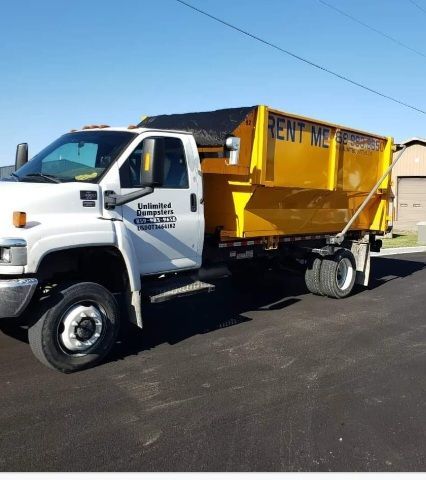
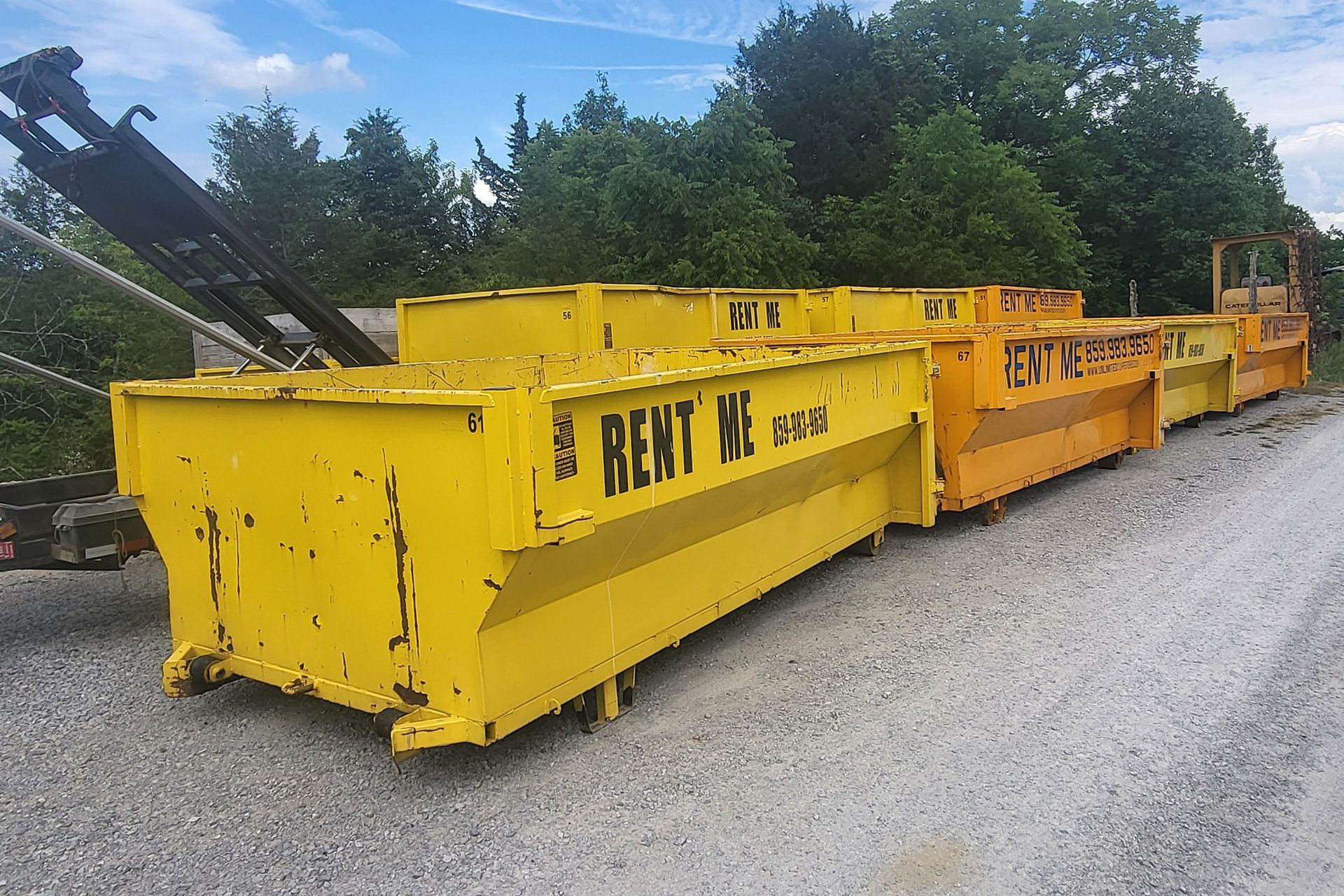
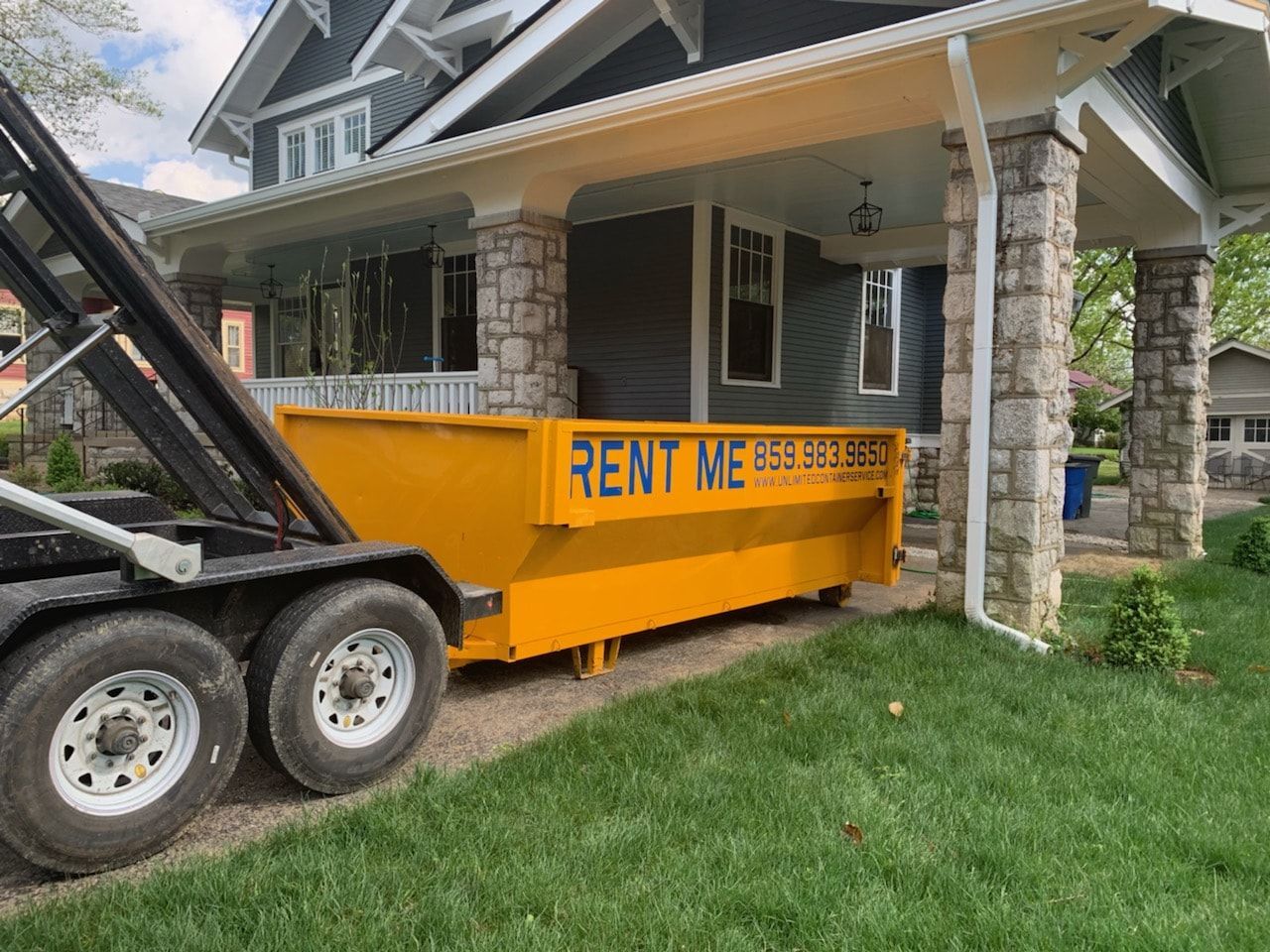
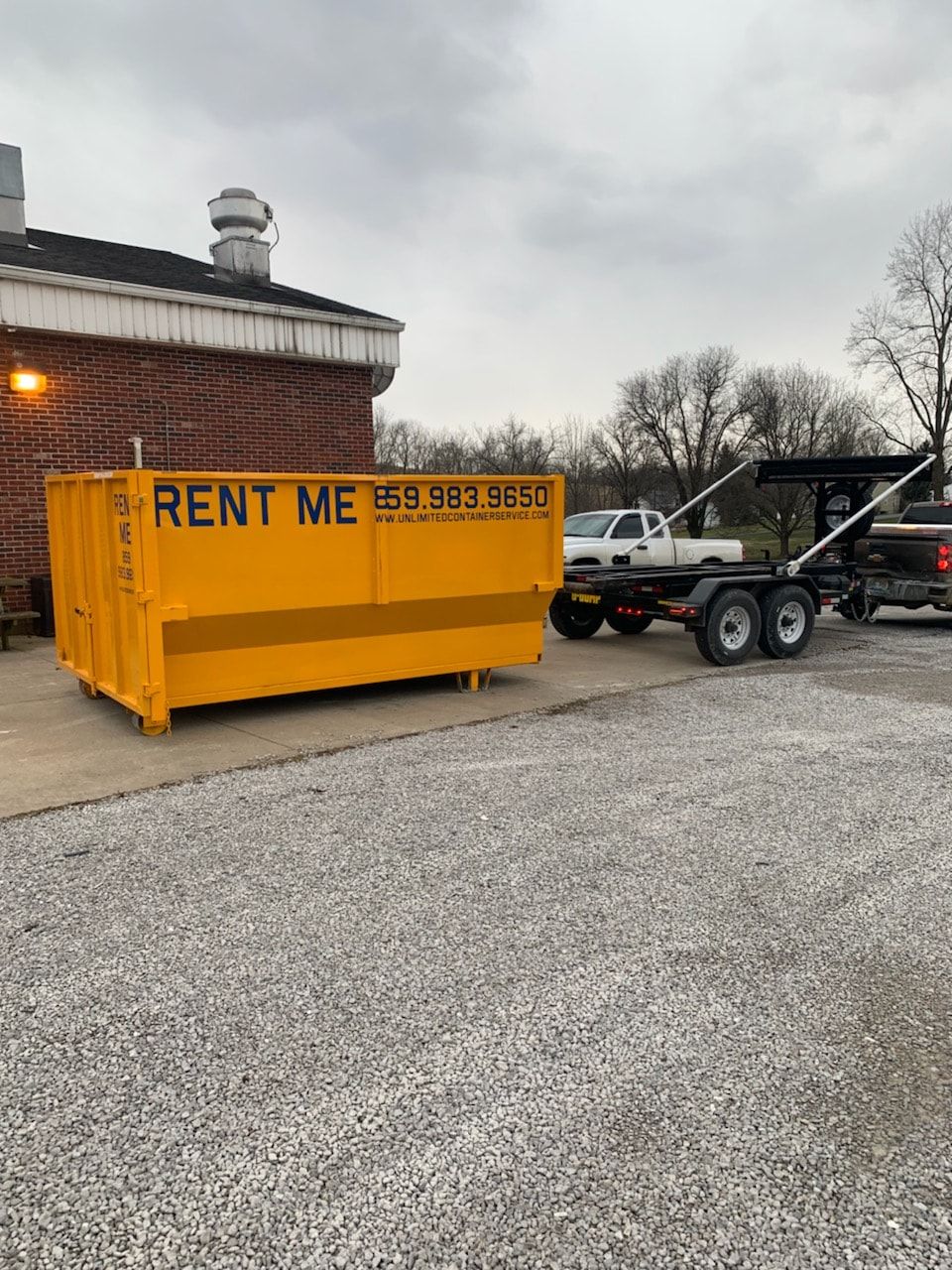
Rental dumpsters generally accept furniture, household junk, mattresses, drywall, flooring, roofing materials, and yard waste. They do not accept hazardous liquids, tires, batteries, refrigerant-containing appliances, or medical waste. Confirming specific items with the rental company before loading prevents rejected loads and added fees.
Anyone asking what can you put in a rental dumpster is usually staring at a mixed pile of furniture, drywall, old paint cans, and a retired refrigerator, with no clear answer on what belongs inside and what does not.
Loading the wrong materials into a rental dumpster can lead to rejected loads, added disposal fees, or fines passed down from the receiving landfill or transfer station. Dumpster rental companies operate under rules set by these facilities, and a single prohibited item can hold up an entire project.
First-time renters in Harrodsburg, Lexington, Frankfort, and Richmond face this question just as often as repeat customers, since disposal rules shift slightly from one facility to the next. This guide breaks down accepted materials, prohibited items, and where prohibited items should go instead, covering household, renovation, yard, and construction debris categories across Central Kentucky.
Reviewing the rules before the dumpster arrives keeps a cleanout, renovation, or construction project on schedule and within budget, rather than stalling halfway through on a disposal question that could have been answered in advance.
Items That Are Generally Accepted in a Roll-Off Dumpster
Most residential and light commercial roll-off dumpsters accept a wide range of everyday debris. The four categories below cover the bulk of what typically fills a rental dumpster during a cleanout or renovation, and each comes with its own practical notes worth reviewing before loading begins.
Household Junk and Furniture
Most household cleanouts generate items that fall well within standard acceptance rules for a rental dumpster, which makes this category the easiest to plan around.
•
Old furniture: sofas, chairs, tables, bed frames, dressers
•
Household items: boxes, clothing, toys, non-hazardous electronics
•
Mattresses: accepted by most companies, though a separate disposal fee sometimes applies
Mattress fees exist because many facilities separate mattresses for component recycling rather than sending them straight to landfill, which adds a handling step on the receiving end. Confirming this fee upfront, rather than discovering it on the final invoice, avoids an unwelcome surprise at the end of a project.
Larger cleanouts benefit from reviewing
rental sizes and options before booking, since matching dumpster capacity to the job prevents ordering a size that fills up halfway through the project.
Renovation and Construction Debris
Renovation and remodeling debris makes up a large share of accepted dumpster loads, though a few materials come with limits worth planning around in advance.
•
Structural materials: drywall, flooring, tile, lumber, insulation
•
Fixtures: cabinets, countertops, and old fixtures pulled during a remodel
•
Windows and doors: accepted in most cases, though glass should be removed carefully before loading
•
Concrete and brick: accepted in limited quantities, since these dense materials push a load toward its weight limit quickly
Drywall and insulation are lightweight by volume but bulky, so a full teardown from a single room can fill more of the dumpster than expected. Separating glass from window and door frames ahead of time reduces the risk of injury during loading and speeds up handling at the receiving facility.
Roofing Materials
Roof tear-offs generate their own accepted category, separate from general renovation debris, largely because of how dense the material is compared to its size.
•
Standard tear-off debris: shingles, underlayment, flashing, fascia boards
•
Hardware: roofing nails and metal trim removed during the same job
Roofing debris is heavy per square foot, so weight limits apply faster than with lighter household junk. A single layer of asphalt shingles on an average roof can weigh several hundred pounds per square, which adds up quickly across an entire tear-off. Confirming dumpster size against total roof square footage before the job begins prevents an overweight surcharge on pickup.
Yard and Landscape Waste
Landscaping and yard cleanup projects fall into a fourth accepted category, though weight limits apply here as well, particularly with dense organic material.
•
Organic debris: branches, brush, sod, leaves
•
Hardscape materials: fencing (wood and metal), pavers
•
Soil materials: dirt and gravel, accepted only in limited quantities because of their weight
Wet sod and freshly cut brush hold significant water weight compared to dried yard waste, so a load that looks moderate in volume can still push toward a weight limit. Chipping larger branches before loading reduces wasted space and allows more material to fit into a single haul.
Items That Are NOT Accepted in a Rental Dumpster
Understanding what not to throw in a dumpster matters as much as knowing what is allowed. Prohibited items for dumpster rental in Kentucky are restricted at the landfill or transfer station level, which means the dumpster company has no ability to accept them either, regardless of load size or project type.
Most restrictions in this section trace back to a small set of concerns: fire risk during transport, groundwater contamination at the landfill, and regulated components that require specialized handling under state or federal law. Recognizing these underlying reasons makes it easier to guess how an unlisted item might be classified.
Hazardous Household Materials
Hazardous household materials make up the largest share of items that get flagged during a load inspection.
•
Wet or liquid paint: dried latex paint is generally accepted once fully hardened
•
Flammable liquids: motor oil, gasoline, solvents, and similar products
•
Chemical products: pesticides, herbicides, fertilizers, pool chemicals, bulk cleaning agents
•
Asbestos-containing materials: require licensed abatement and cannot go in a standard roll-off under any circumstance
Latex paint can often be dried out with cat litter or a commercial paint hardener and then disposed of as solid waste, which is a common workaround for renters clearing out a garage or basement. Oil-based paint and any container still holding liquid should be treated as hazardous regardless of how full or empty it appears.
The
EPA guide to household hazardous waste disposal outlines how these materials should be handled and where they are typically accepted instead.
Automotive and Mechanical Items
Tires rank among the most commonly rejected items found in rental dumpster loads, largely because most landfills will not bury them due to long-term settling and gas buildup issues.
•
Tires: must be recycled through a tire retailer or a designated recycling facility
•
Batteries: car and truck batteries are accepted at most auto parts stores for recycling
•
Fuel components: fuel tanks and oil filters, due to residual fuel and oil content
Oil filters in particular tend to slip into loads unnoticed since they look like ordinary automotive scrap, but residual oil inside the filter housing classifies them as hazardous waste at most facilities.
The
how to properly recycle tires guide covers the recycling process for tires in more detail.
Appliances with Refrigerants
Refrigerators, freezers, air conditioners, and dehumidifiers all contain regulated refrigerants that require certified handling before disposal, so these units cannot go into a standard dumpster load without prior refrigerant removal.
Federal law under the Clean Air Act restricts how refrigerants are removed and handled, which is why a standard dumpster load cannot include these appliances without documentation that the refrigerant has already been reclaimed.
Many municipalities hold appliance recycling events throughout the year, and certified appliance recyclers handle refrigerant removal on a routine basis. Contacting one of these services before the rental period begins prevents a rejected load on pickup day.
Electronics and Medical Waste
Televisions, monitors, and computers sometimes contain hazardous components depending on age and manufacturer, which can affect acceptance on a case-by-case basis. Older units with cathode ray tubes carry a higher likelihood of restriction than newer flat-panel models.
Sharps and other medical waste require dedicated disposal channels and are never accepted in a rental dumpster. Many pharmacies and county health departments offer sharps container drop-off or mail-back programs for this category.
What Happens If Prohibited Items Are Found?
A disposal facility that finds prohibited items in a load can reject the entire dumpster, which triggers a return trip and additional fees. Sorting through a full load to remove a handful of restricted items is time-consuming and rarely offered as a service, so the whole container often gets sent back.
Fines issued by the landfill or transfer station are typically passed on to the renter rather than absorbed by the dumpster company. These charges add up quickly, especially on hazardous material violations, and can exceed the original rental cost depending on the severity of the issue.
A rejected load also affects project timing, since a return trip usually means waiting for a new pickup and drop-off window before work can continue. Projects on a tight schedule feel this delay more than a casual weekend cleanout would.
When in doubt about a specific item, the safest approach is to call before loading rather than after. Renters who contact the team before loading can confirm the status of any questionable item in a few minutes rather than risking a rejected load later.
Where to Dispose of Prohibited Items in Central Kentucky
Central Kentucky has several established channels for the items that cannot go into a rental dumpster, and knowing where to take these materials ahead of time keeps a cleanout or renovation project moving without delay.
The Kentucky Department for Environmental Protection runs household hazardous waste disposal events throughout the year across the state, and the
Kentucky household hazardous waste collection information page lists upcoming dates and accepted materials for these events.
•
Tires: local tire retailers typically accept used tires for a small per-tire fee
•
Batteries and oil: auto parts stores such as AutoZone and O'Reilly accept these items free of charge in most locations
•
Appliances: appliance dealers and certified recyclers handle refrigerant-containing units, often at no cost when a replacement unit is purchased
Lexington and Frankfort both maintain periodic collection events for household hazardous waste, while smaller communities like Harrodsburg and Richmond typically route residents to the nearest county-level event or a regional drop-off point.
Renters in the
dumpster rental Harrodsburg KY service area have access to most of these disposal channels within a short drive of the project site.
Tips for Loading a Dumpster Efficiently and Safely
Placing heavy, flat items on the bottom of the dumpster creates a stable base and makes better use of the available space. Breaking down bulky items such as furniture and cabinetry before loading saves room for additional debris and reduces the number of awkward gaps in the load.
Distributing weight evenly across the container, rather than piling material to one side, keeps the dumpster balanced during transport and reduces strain on the truck during pickup.
Filling above the marked fill line is not permitted, since a flush or overfilled dumpster cannot be transported safely on public roads. Keeping prohibited items completely separate from the main load, even temporarily, prevents accidental contamination that could result in a rejected pickup. A tarp over the top of a load also helps during multi-day rentals, keeping rain out of drywall, cardboard, and other materials that absorb water and add unwanted weight.